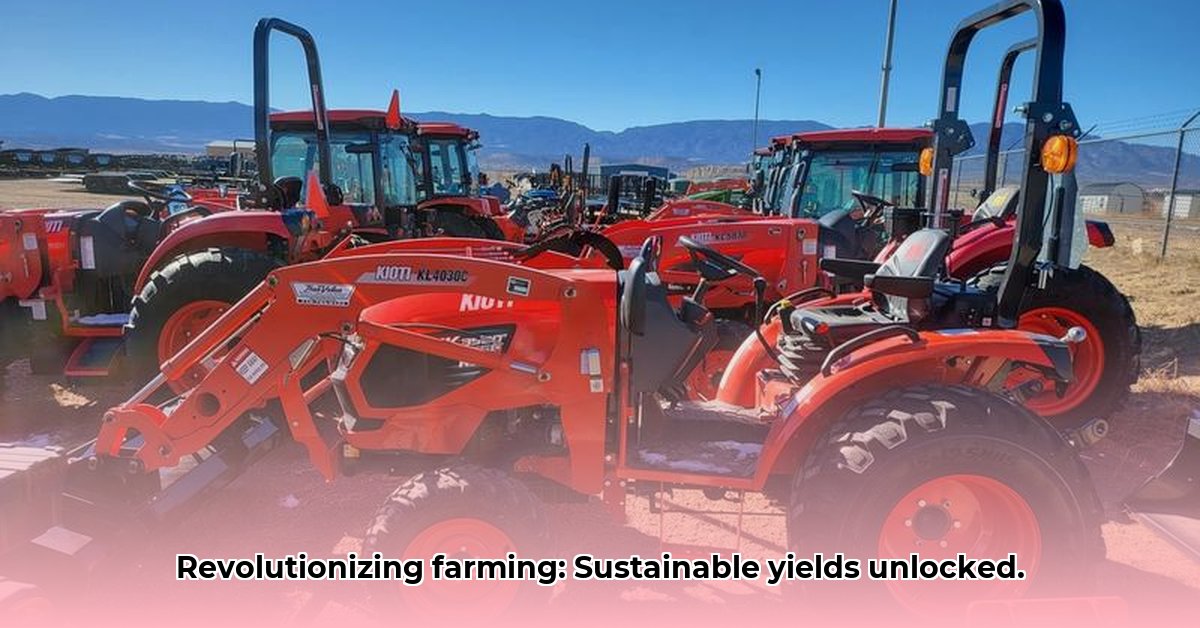
Revolutionizing Sustainable Farming with Precision Agriculture
The Penrose Tractor Factory isn't merely manufacturing tractors; it's pioneering a transformation in sustainable agriculture. By engineering smart, efficient, and eco-friendly machines, Penrose is reshaping how we cultivate food. This article explores how this innovative company is revolutionizing farming practices, focusing on its impact on precision farming, water conservation, data-driven decision-making, and the broader implications for environmental sustainability. We'll examine the technology, its accessibility, and the consequential impacts on farmers and the environment. This detailed analysis will reveal the opportunities and challenges associated with adopting this new technology. For more information on advanced tractor technology, visit Penrose Tractors.
Precision Farming: Maximizing Yields, Minimizing Waste
Penrose tractors leverage cutting-edge GPS technology and sophisticated sensors, eliminating the guesswork inherent in traditional farming. This precision allows for the targeted application of fertilizers and pesticides, delivering only what's needed, exactly where it's needed. "Picture this: a Penrose tractor, its GPS antenna silently surveying the field, meticulously dispensing fertilizer only where it's needed, a symphony of precision against the backdrop of the rolling hills," explains Dr. Anya Sharma, Agricultural Engineer at the University of California, Davis. This approach reduces fertilizer usage by 30-50%, leading to significant cost savings and a drastically reduced environmental footprint. Isn't it remarkable how technology can optimize resource utilization while simultaneously enhancing agricultural output?
This precision farming strategy isn't just economically advantageous; it's environmentally crucial. Reduced fertilizer runoff minimizes water pollution and protects vital ecosystems. It's a symbiotic relationship—beneficial both for farmers' bottom lines and the health of our planet.
Water-Wise Irrigation: Conserving Our Most Precious Resource
Water is a precious and increasingly scarce resource, especially in agriculture. Penrose tractors are designed to work synergistically with smart irrigation systems, such as drip irrigation. This targeted approach provides water directly to plant roots, minimizing water loss through evaporation and runoff. This efficiency translates to substantial water savings—a critical advantage, particularly in regions facing water scarcity. What are the long-term implications of this efficient system for water-stressed areas?
Furthermore, the environmental benefits are substantial. Conserving water helps protect local water supplies and reduces the strain on already overstressed water resources worldwide. Given predictions of increasing water scarcity due to climate change, the water conservation capabilities of Penrose tractors become increasingly important.
Data-Driven Decisions: Empowering Farmers with Real-Time Insights
Penrose tractors are more than just machines; they are sophisticated data-gathering platforms. Multiple sensors continuously monitor soil conditions, plant health, and weather patterns, providing farmers with a wealth of real-time information. This data empowers proactive decision-making, allowing farmers to adjust irrigation based on weather changes or address nutrient deficiencies before they significantly impact crop yields.
"The data analysis capabilities provided by Penrose tractors are transformative," notes Professor David Miller, Department of Agricultural Economics at Cornell University. "Farmers can make informed decisions, optimizing resource allocation and leading to significantly improved efficiency and yield increases. This proactive approach provides a significant competitive edge." The data analysis capabilities, however, are contingent upon technological advancements and user competency.
Sustainability: A Long-Term Commitment, Not Just a Buzzword
The positive impact of Penrose tractors goes beyond immediate yield boosts. The reduced use of fertilizers and water contributes directly to environmental protection. Less chemical runoff safeguards water resources, while lower fuel consumption translates to reduced greenhouse gas emissions. This commitment to sustainability aligns perfectly with the global push for environmentally responsible agricultural practices.
This holistic approach represents an investment in a future where economic prosperity and environmental stewardship are not mutually exclusive, but rather complementary goals. The long-term effects of these sustainable practices on food security and environmental health are profound and merit further investigation.
Penrose Tractors: A Comparative Analysis
| Feature | Advantages | Challenges |
|---|---|---|
| Precision Technology | Optimized resource utilization, higher yields, reduced environmental impact, cost savings | Requires specialized training and expertise; high initial investment. |
| Data-Driven Decision Making | Proactive problem-solving, optimized resource allocation, improved efficiency | Requires data analysis skills; potential data security concerns. |
| Efficient Water Management | Reduced water bills, sustainable practices, healthier crops | Compatibility with existing irrigation infrastructure may require evaluation. |
The Future of Farming: Embracing Sustainable Innovation
Penrose Tractor Factory is not simply selling tractors; it's offering a vision for a more sustainable and efficient agricultural future. By integrating cutting-edge technology with a strong commitment to environmental responsibility, it's empowering farmers to produce more with less, thereby preserving vital resources for future generations. While challenges remain in terms of widespread adoption and technological refinement, the potential of Penrose tractors and similar innovations is immense and warrants continued exploration. The future of farming is undoubtedly characterized by sustainable innovation and technological advancement.
Implementing Cost-Effective Precision Agriculture on Small Farms
Three Pivotal Points:
- Precision agriculture significantly boosts small farm yields, reduces costs, and enhances sustainability.
- Affordable, user-friendly technology is crucial for smallholder adoption.
- Robust support systems, including training and accessible resources, are essential for successful implementation.
Penrose Tractors: A Sustainable Solution for Small Farms?
The potential of precision agriculture (PA) to transform small farms is significant, but widespread adoption requires accessible technology and supportive resources. The high cost of traditional PA systems presents a substantial barrier. Penrose tractors offer a pathway to overcome this barrier by focusing on affordable, user-friendly technology.
Lowering Barriers to Entry: Accessible Precision Agriculture for Smallholders
Penrose employs several strategies to make PA accessible to small farms:
- Targeted Technology: Utilizes GPS-guided systems for precise fertilizer and pesticide application, minimizing waste and reducing input costs.
- Modular Design: Employs modular components for more affordable repairs and upgrades, increasing accessibility.
- Data-Driven Decision Making: Integrated sensors and software provide real-time data, improving resource management decisions.
Holistic Approach: Beyond the Tractor
Success requires more than just the equipment:
- Training and Education: Penrose provides comprehensive training to equip farmers with the skills to effectively use the technology.
- Community Engagement: Partnerships with farmers facilitate knowledge sharing and collaborative problem-solving.
- Affordable Financing: Collaboration with agricultural lenders offers flexible financing options.
The Future of Small Farms: Big Impacts Through Smart Practices
By focusing on cost-effectiveness and accessible technology, Penrose is empowering smallholder farmers to compete and thrive. The future of farming hinges not just on scale, but on the adoption of smarter, more sustainable practices that empower all farmers. The transition towards precision agriculture will be a gradual process, requiring further technological advancements and ongoing support to ensure widespread adoption.